Judge the company by its paperwork
A fireplace inspection takes about an hour. What it produces is what you keep: the document you forward to an insurer, hand to a buyer, or use to decide whether a repair is worth doing. So when you compare companies in Signal Hill, Long Beach or anywhere nearby, ask each one for a sample report before you ask what it charges. A low price attached to a page of ticked boxes buys you very little.
Tierney Chimney Experts builds its whole service around that document. This page sets out what a report you can use should contain, the warning signs of one you cannot, and what our fireplace inspection looks at in the room.
What a usable report contains
Hold any sample report up against this list:
- The basics. Address, date, the company that did the work and which inspection level was done.
- What the fireplace is. An open masonry fireplace, a factory-built metal box, an insert, a gas log set or a freestanding stove, named plainly, because each one fails in its own way.
- A photo per part. Not one wide shot of the room, but a frame for each part examined, with a caption saying what you are looking at.
- A verdict per finding. Whether the part is sound, worth watching, or needs repair before the next fire.
- A location. "Crack in the rear firebox panel, left of center" is a finding. "Firebox damage" is not.
- A consequence. What happens if the finding is ignored, in one sentence.
- A next move, and its price where one is published. If the company has a price list, the report should quote from it.
Warning signs in a sample report
These turn up often, and each one leaves you with a bill but no answer:
- A checklist of ticks and crosses with no photographs.
- "Recommend further evaluation" without saying what is to be evaluated or why.
- "Repairs needed" with no part named and no location.
- A repair price with no description of what the price covers.
- Findings that end in a product pitch rather than a reason.
If a company cannot show a sample, or the sample looks like the list above, keep looking.
What we look at in the room
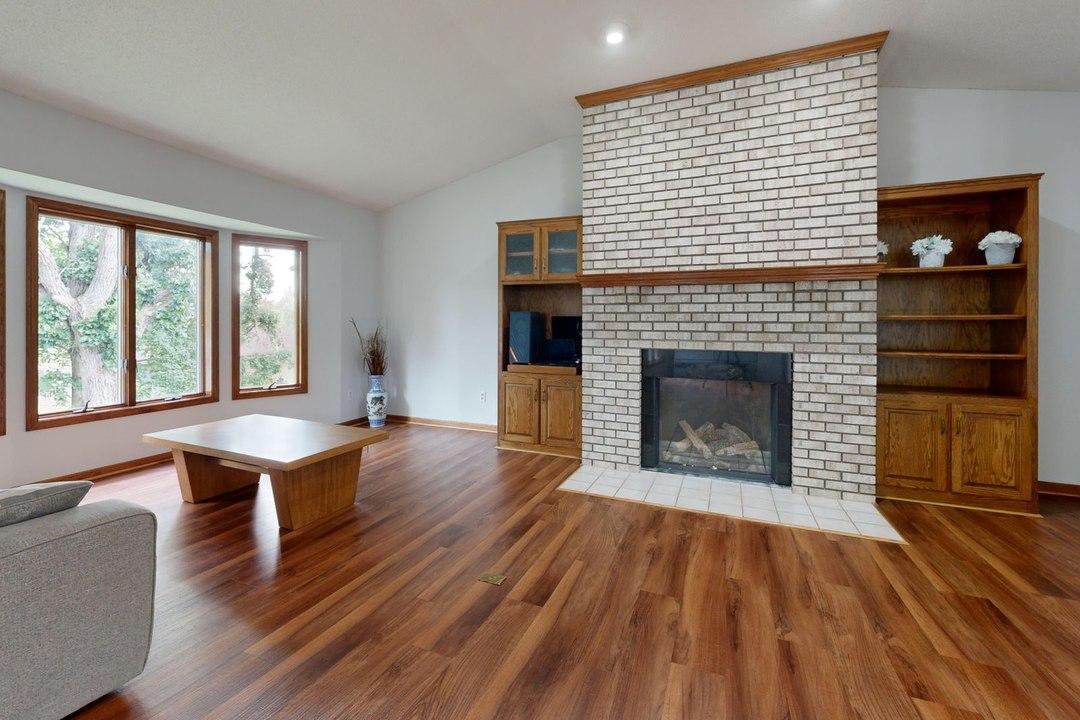
Our fireplace inspection concentrates on everything between the hearth and the throat of the chimney. The panels or brick of the firebox are checked for cracks, gaps and missing mortar. The hearth extension in front of the opening is measured and checked for cracks an ember could fall through. We measure from the opening to the mantel and any wood trim, because combustibles too close to a fire are one of the commonest findings we write up. We work the damper, look at the glass doors or screen, and on factory-built units we find the metal label plate that lists the model and its required clearances, then check the installation against it.
Where the fireplace burns gas, we light the burner, look at how the flame sits on the logs, check the pilot and the valve, and record a carbon monoxide reading near the opening. If anything about the gas supply worries us, the burner stays off and the report says why.
Fireplace and chimney are covered together in both of our reports. A Level 1 at $54 takes the room, the roof and the attic as they can be seen. A Level 2 at $390 adds recorded camera footage of the flue. The room side of the work is the same in both.
Fireplace questions and chimney questions
The two overlap, but they answer different things. If your question is about the room, the fireplace inspection answers it: can we use this fireplace, is the mantel too close, why does the glass blacken, why does smoke roll out of the opening. If the question is about the flue or the roof, the chimney side answers it. Most houses with a fireplace in regular use get both in one visit, and the report covers both on the same pages.
Four things to check when you compare companies
1. Will I get a photograph of every finding, with a caption? 2. Will the report say which inspection level was done? 3. Who receives the report: only me, or also my agent, landlord or insurer if I name them? 4. Are repair prices written down, and does the company publish any of them?
Our answers: yes, yes, you plus anyone you name, and yes. Published ranges cover leak repair ($555 to $3,300), crickets ($445 to $1,000, or $665 to $1,650 with new flashing all round) and sealed gas heaters fitted into an open fireplace ($2,750 to $5,550). Caps are quoted after we measure. Everything else gets a written figure from measurements taken on the visit.
What decides the next move
The next move after the visit depends on three things in the report: the verdicts, the fuel, and what you plan to do with the fireplace. A wood-burning firebox with a cracked rear panel and a household that wants winter fires points to a firebox repair. The same crack in a fireplace you never light may only need a note on file. A gas set with a lazy, sooty flame points to a service call rather than masonry work.
If you are not sure which kind of visit your fireplace needs, describe it in the request form: what it burns, when it was last used and what made you want it looked at. We reply with the inspection level that fits and its price.
Who books us in Signal Hill
Owners who want to light a fireplace they have not used in years. Buyers whose home inspector wrote "have a specialist look at this." Landlords who need a dated record per unit. Sellers who would rather know before a buyer finds out. Each gets the same report format, so it reads the same whichever of them forwards it.
Read Signal Hill inspection prices for the full price breakdown, or see the fireplace inspection service page. When you are ready to put a date on it, the contact page takes the booking.
Want This Written Up for Your Address?
Tierney Chimney Experts inspects chimneys from Signal Hill outward. Book through the contact page and the report arrives with a photo, a position and a label for each finding.